
About
Anhui Tianshun Environmental Protection Equipment Co., Ltd. was established in May 2007. it is a na.tional high-tech enterprise specializing in the design, production, operation, and related supporting servicesof environmental protection equipment, The company attaches great importance to technological innoyationin its products, and has 29 invention patents, 28 utility model patents, and 6 software copyrights in smoke anddust control, bag type dust removal, desulfurization, and denitrification. Our company's customers are locat.ed in more than 20 provinces, cities, and autonomous regions across the country. Our products are widelyused in various industries such as cement, smelting, steel, chemical, and urban waste treatment. We enioy ahigh reputation in the industry and have become a backbone enterprise in the domestic ferroalloy environ.mental protection and dust removal industry. The company currently has more than 260 employees, including46 technical personnel with intermediate or higher professional titles, with an annual output value of hun.dreds of milions of yuan and tax payments of nearly ten million yuan. Looking towards the future, the company always adheres to market demand orientation, continuously develops new products, and strives to meetthe eneray-saving and consumption reduction requirements of resource utilization in the 14th five Year Planmaking more contributions to China's environmental protection cause. https://www.environtechts.com/
Home
Anhui Tianshun Environmental Protection specializes in industrial air pollution control equipment. We offer innovative solutions for flue gas treatment, dust removal, desulfurization & denitrification, serving cement, steel and chemical industries globally.
Contact
-
Hanshan Industrial Park, Lintou Town, Hanshan County, Ma'anshan City, Anhui Province, China.
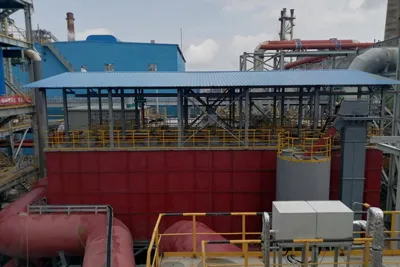 FLUE GAS DESULFURIZATION (FGD) — INDUSTRIAL EMISSION EQUIPMENT
Engineered to deliver high-efficiency solutions to solve industrial waste air pollution, this custom-designed flue gas purification system for the 100,000-ton/year granular silicon green upgrading project provides deep treatment for operational emissions. It efficiently removes dust, acidic gases, and heavy metals, guaranteeing full compliance with environmental standards while driving sustainable, low-pollution manufacturing.
WHAT IS FLUE GAS DESULFURIZATION (FGD)?
Flue Gas Desulfurization (FGD) is a critical technology for air pollution control designed to remove sulfur dioxide (SO₂) from the exhaust flue gases of industrial processes, power plants, and chemical manufacturing. As regulatory standards tighten worldwide, implementing reliable FGD systems has become an essential environmental protection solution for heavy industries to mitigate acid rain and reduce harmful emissions.
By neutralizing gaseous pollutants before they reach the atmosphere, this process directly addresses major environmental pollution problems and solutions in modern manufacturing. Implementing advanced FGD systems not only curables industrial emissions but also offers reliable solutions to reduce pollution, ensuring factories maintain ecological compliance while fostering sustainable, clean production.
How Flue Gas Desulfurization Works
- ABSORPTION OF SO₂
As a fundamental process in gaseous pollutants control, flue gas enters the absorber tower, where it contacts an alkaline absorbent (typically limestone slurry). The SO₂ reacts chemically to form stable compounds, capturing harmful elements at the source.
- GAS–LIQUID REACTION & SULFATE FORMATION
Through continuous spraying, circulation, and mixing, SO₂ is successfully converted into calcium sulfite or gypsum. This stage represents a highly efficient environmentally friendly dust control and gas purification mechanism, achieving deep sulfur removal.
- CLEAN GAS DISCHARGE
The treated flue gas passes through demisters to remove residual droplets before being safely discharged into the atmosphere. This final step delivers proven solutions to reduce environmental pollution and ensures full compliance with strict emission standards.
Key Components of a Flue Gas Desulfurization System
- ABSORBER TOWER
As the heart of our emission control equipment, the absorber tower is the core unit where flue gas contacts the absorbent. It is heavy-duty engineered to provide sufficient reaction space and optimal gas-liquid contact, ensuring maximum SO₂ removal efficiency.
- SLURRY PREPARATION & CIRCULATION SYSTEM
This critical subsystem includes premium tanks, mixers, and pumps designed to precisely prepare and deliver limestone slurry. By maintaining continuous, uniform absorption and reaction, it serves as a highly reliable environmental protection solution to prevent operational downtime.
- DEMISTER & AUXILIARY EQUIPMENT
High-efficiency demisters effectively remove liquid droplets from the treated gas, while heavy-duty fans, pipelines, and automatic control systems work in tandem. Together, they ensure stable, around-the-clock system operation and strict compliance with global environmental problems and solutions metrics.
If you want to know more about flue gas services and air pollution and how to reduce it, please visit our website.
As an air pollution control equipment environmental protection equipment env manufacturer, we will do our best to meet all the needs of customers.
 FLUE GAS DENITRIFICATION — AIR POLLUTION CONTROL SYSTM
As a high-performance selective catalytic reduction system, our custom-designed reduce pollution solutions is engineered to deeply treat NOx and industrial emissions produced during factory operations. It efficiently captures hazardous gases, drastically reduces atmospheric pollution, and ensures stable, reliable production in strict compliance with the highest environmental standards.
How Flue Gas Denitrification (DeNOx) Works
- AMMONIA OR UREA INJECTION
As the initial phase in industrial control in air pollution, an ammonia or urea reducing agent is precisely injected and mixed into the flue gas stream, perfectly preparing the NOx molecules for deep purification.
- CATALYTIC OR THERMAL REDUCTION
Inside the heavy-duty selective catalytic reactor, a chemical reaction occurs under optimized thermal conditions. Guided by an advanced nox reduction catalyst, toxic emissions are successfully converted into harmless nitrogen (N2) and water vapor (H2O).
- CLEAN GAS DISCHARGE
The fully purified flue gas complies with the most stringent global emission standards. This final stage delivers high-tier solutions to reduce air pollution, ensuring safe, environmentally compliant discharge into the atmosphere.
Advanced Flue Gas Denitrification Systems: Core Pollution Control Equipment
- CATALYST REACTOR
As the core technical unit within our control equipment of air pollution, this robust reactor provides an optimized chemical environment for efficient nox removal. It is heavy-duty engineered to ensure exceptional, long-term stable performance under high-temperature industrial loads.
- AMMONIA STORAGE & INJECTION UNIT
Designed as an essential solution to prevent air pollution harmful gases, this unit safely stores, precisely meters, and accurately injects ammonia. By maintaining a perfect chemical balance inside the selective catalytic reduction system, it guarantees maximum reaction efficiency and total plant safety.
- FLUE GAS CONTROL & MONITORING SYSTEM
This advanced smart module regulates temperature, flow, and complex operating conditions while delivering real-time emission monitoring. Serving as an intelligent flue gas treatment system, it empowers factories to achieve continuous compliance with strict regional environmental policies.
Technical Advantages of Our Air Pollution Control System
HIGH-EFFICIENCY NOX REMOVAL
Utilizing advanced scr catalytic reduction, our system guarantees up to 95%+ high-tier efficiency in nox removal from flue gas, successfully meeting the most stringent global emission standards.
ADVANCED CATALYST PERFORMANCE
Equipped with premium, heavy-duty nox reduction catalyst elements, the system delivers exceptional thermal stability and long-lasting chemical activity, drastically extending the replacement and maintenance cycle.
INTELLIGENT PLC AUTOMATION
The entire air pollution control system is managed by an intelligent PLC control module, enabling automated ammonia injection, real-time data tracking, and unmanned monitor control.
If you want to know more types of air pollution control devices, please visit our website.
Anhui Tianshun specializes in the design, manufacturing, and operation of air pollution control equipment environmental protection equipment env, offering comprehensive supporting services. The company holds a Class-B engineering design certificate for air-pollution control and a Class-I professional contracting qualification for environmental protection projects.
 FIXED-BED DESULFURIZATION
This system uses a calcium-based granular desulfurizer to absorb sulfur dioxide from flue gas, producing calcium sulfate. The system is implemented using a quasi-intermittent moving bed system. Alkali (primarily composed of Ca(OH)2) and catalyst granules are placed in a desulfurization reactor. As the flue gas flows through, the sulfur dioxide is oxidized to sulfur trioxide, which then solidifies into calcium sulfate (gypsum) solids. The entire process uses no water and produces no wastewater. Furthermore, there is no need for desulfurization, making it simple to operate. It is also not very sensitive to flue gas temperature and is suitable for almost all flue gas conditions.
KEY BENEFITS OF FIXED-BED DESULFURIZATION
Fixed-bed reactors of varying structures and sizes can be configured to meet the needs of limited on-site space.
Simultaneously removes pollutants such as SO2 and dust.
Reduces nitrogen oxide emissions to a certain extent; the desulfurization tower itself reserves space for future denitrification agent loading, allowing existing equipment to reduce nitrogen oxide emissions.
Minimal resistance loss; low fan power and energy consumption.
Desulfurization agent loading and replacement can be flexibly adjusted to meet the needs of on-site production organization.
Virtually no maintenance is required.
APPLICATION OF FIXED-BED DESULFURIZATION
This system offers advantages such as simple operation, no wastewater generation, minimal equipment corrosion, and low temperature drop. Its primary applications include: flue gas treatment for blast furnace hot blast stoves and rolling mill reheating furnaces in the steel industry; as well as flue gas purification for gas-fired boilers and coke ovens in other industrial sectors, ensuring compliance with environmental protection requirements.
If you want to know more about solutions to nitrogen oxide pollution, please visit our website.
Now price of air pollution control equipment environmental protection equipment env is reasonable, anything you need, please contact us.